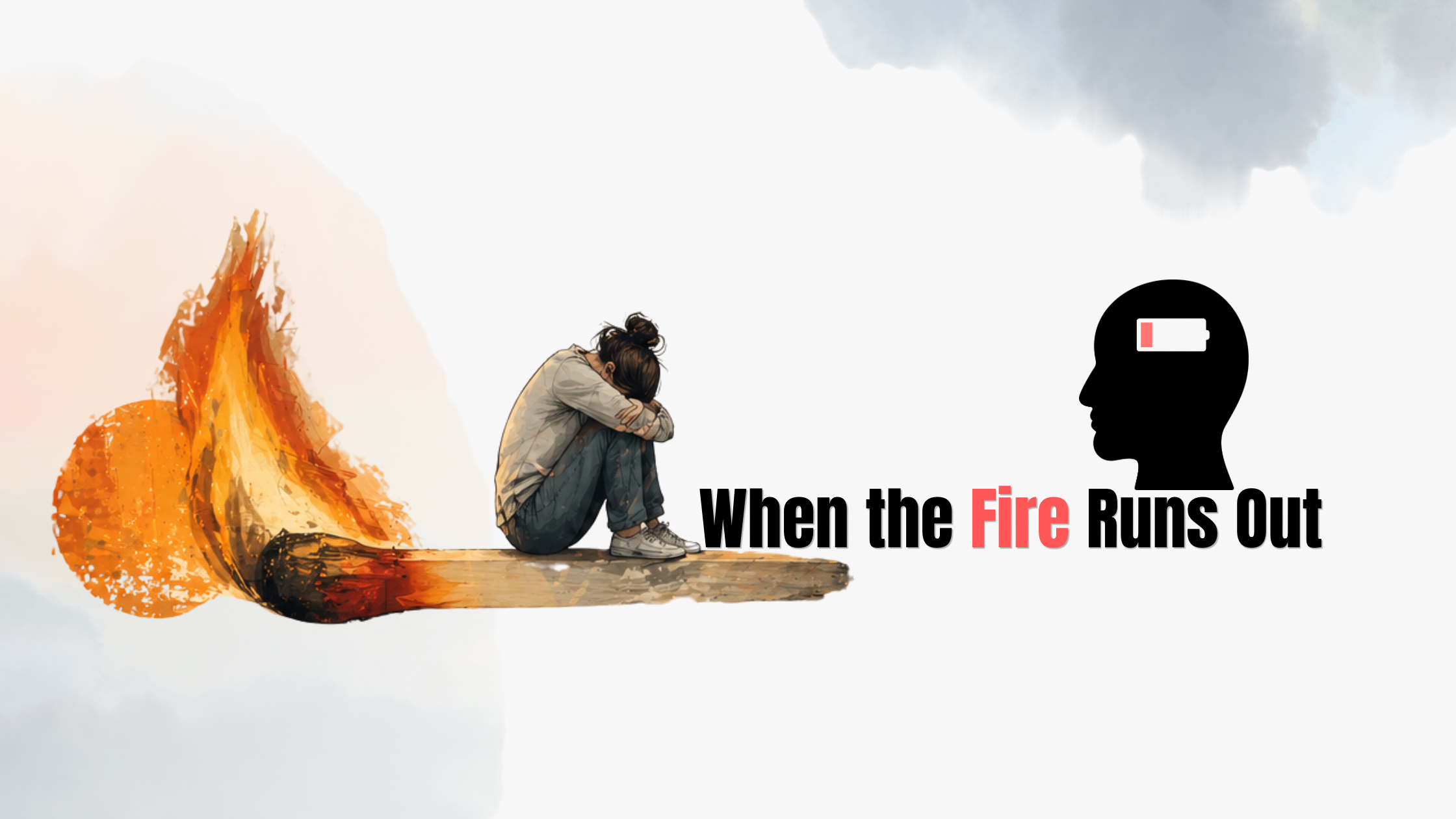
What happens when pushing through stops working. How one woman found her way back to herself. It did not start with a breakdown. It started with coffee not working anymore.
Rei's alarm would go off and she'd already be exhausted — before the day had even started. She told herself what most ofus tell ourselves: everyone's tired, everyone's stretched thin. So she kept going. Deadlines piled up. Messages arrived late at night and she answered them.
Friends texted and she replied with "soon," fully meaning it, but "soon" never quite came.
Then one ordinary Tuesday, she pulled into the work car park, sat in the driver's seat — and just couldn't go in. Notbecause she was sick. Not because anything dramatic had happened. She was simply empty. Like a phone that had been on a call for too long and finally went dark.
Burnout does not announce itself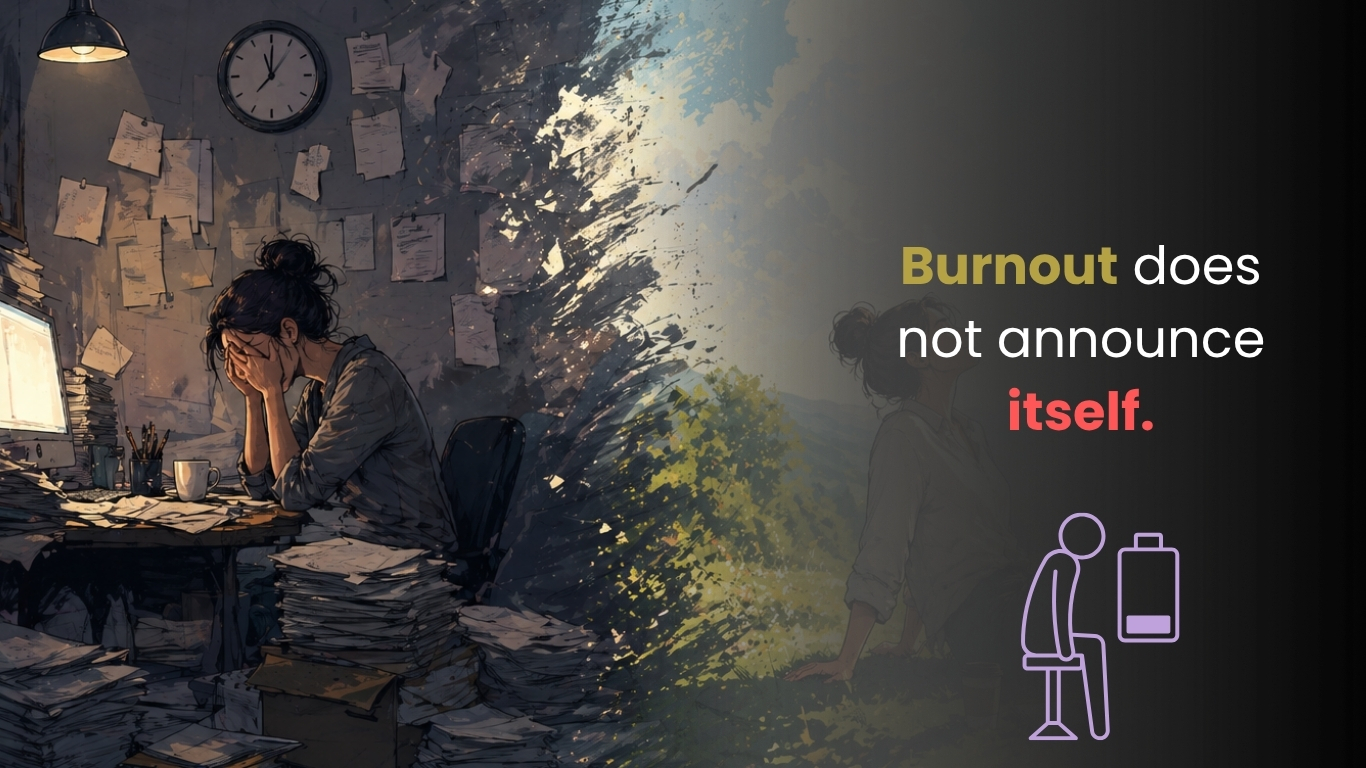
Here is the thing about burnout that makes it so disorienting: it is an erosion, not a sudden collapse. For a while it can actually look like motivation. You are moving fast getting things done running on adrenaline and grit. Then one day the tank is simply gone. You have no idea how you got there.
Psychologists describe burnout as a state of exhaustion detachment from the things that once mattered and a creepingsense that nothing you do is ever quite enough. In life burnout feels less clinical than that. It feels like losing the version of yourself that used to care.
Some of the signs that're easy to brush off:
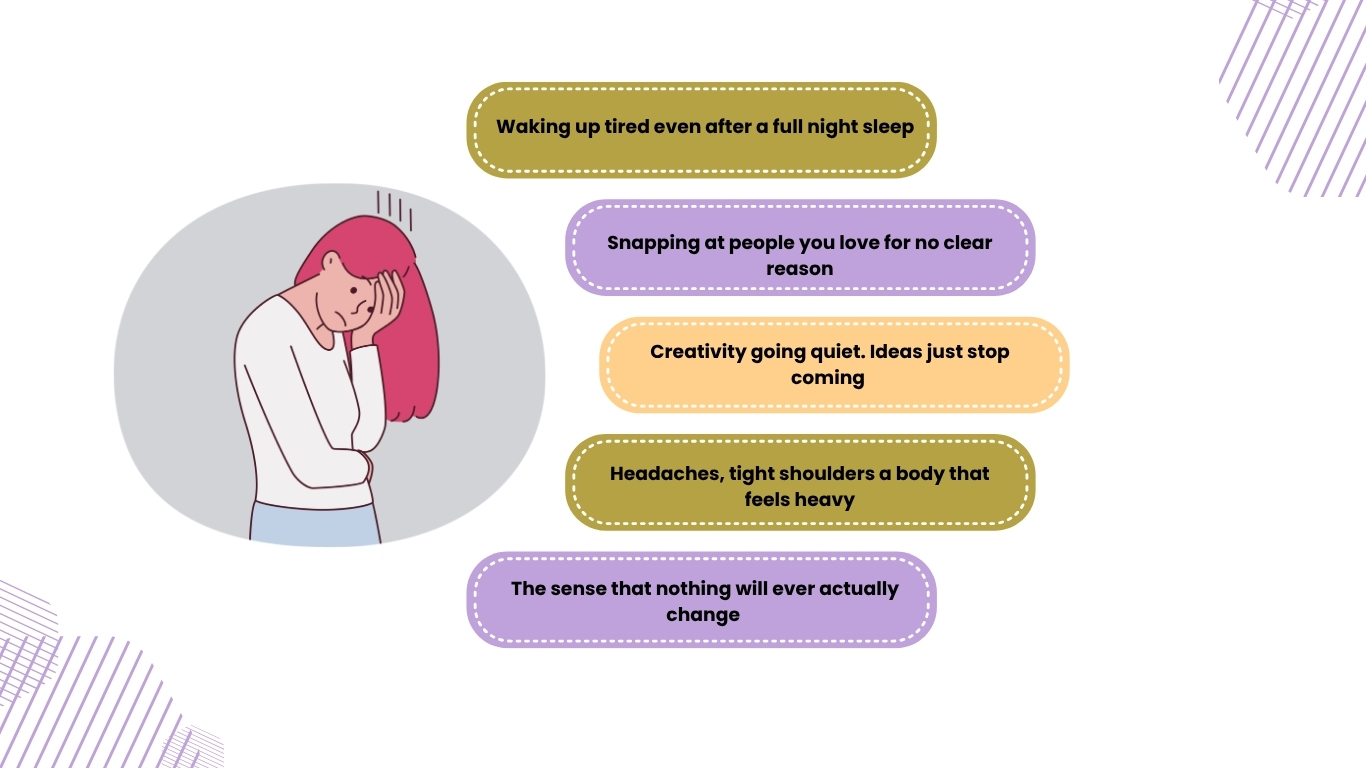
- Waking up tired even after a full night sleep
- Snapping at people you love for no clear reason
- Creativity going quiet. Ideas just stop coming
- Headaches, tight shoulders a body that feels heavy
- The sense that nothing will ever actually change
Rei had all of them. She chalked it up to personal failure. Not a recognisable treatable condition.
You are not broken. You are depleted.
A therapist said something to Rei that changed things. Not a grand revelation. Six quiet words: "You are not broken. You are burned out."
That reframe matters more than it might seem. When you believe you are the problem, you double down — you push harder, sleep less, try to white-knuckle your way through. When you understand you are depleted, you can actually begin to replenish.
For Rei recovery was not dramatic. It was things practised daily. Evening walks without her phone. Saying no to a project. And not apologising for it. Learning that rest is not a reward you earn after you have done enough; it is the fuel that makes everything else possible.
Rekindling the spark slowly
Recovery from burnout is not about quitting everything and moving somewhere remote. Though the fantasy of that has its quiet comfort. It is about reclaiming your energy in sustainable ways.
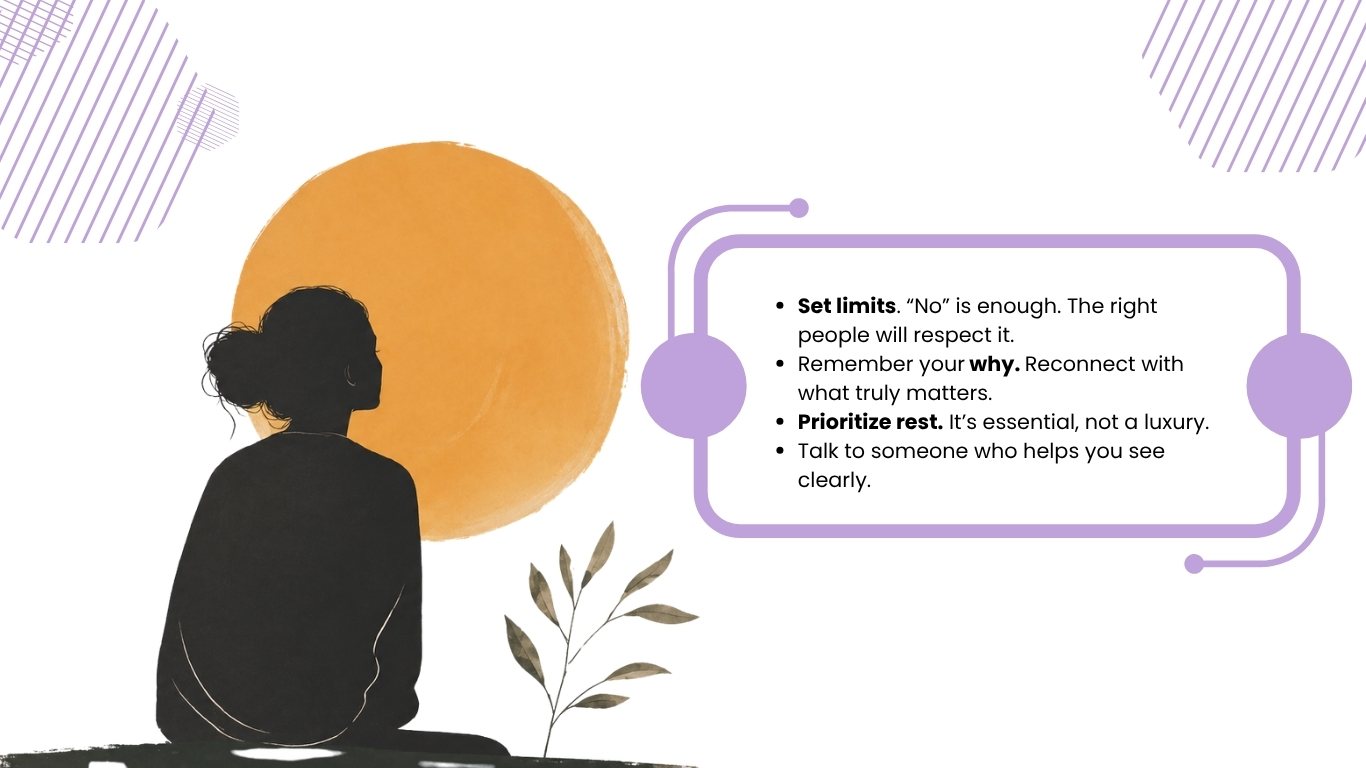
· Set limits. "No" is a sentence. The people who matter will respect it.
· Remember what you are for. Reconnect with the "why" behind your work your relationships, your choices.
· Treat rest as non-negotiable. Not a luxury. Not laziness. A biological and emotional necessity.
· Talk to someone. A trusted friend, a therapist, anyone who can help you see yourself clearly than burnout will let you.
If you see yourself in any of this. In the tiredness that does not lift in the disconnection from things you used to love. Please know that burnout is not weakness. It is what happens when you have been strong for a long time, without enough support or rest to sustain it.
Healing starts with awareness. It continues with compassion. Sometimes it begins with the smallest brave act:admitting you need help. You do not have to carry burnout. Rei did not have to carry burnout. Burnout is not something you have to face by yourself.